
Industries
Rehab and Treatment Facility Cleaning
Start the next session in a clean group room and serve the next meal in a fresh dining hall. Denali provides treatment facility cleaning to your own protocol for residential and outpatient programs, timed around shifts, sessions and meals.
Printable checklist
Facilities that run every hour of the day
A residential treatment program operates like any round-the-clock facility. Staff change shifts, meals come out on a fixed timetable, groups fill and empty rooms, and the building never fully closes. Denali brings the same shift-aware planning it uses in plants and distribution centers to treatment facilities, so residents and staff live and work in a building that stays clean from one shift change to the next.
The difference here is the people. Cleaning in a treatment setting is quiet, unhurried and respectful, with crews who understand that the building is someone’s temporary home and the place where hard work happens.
Treatment settings in our service area
Residential and outpatient programs sit throughout the regions Denali covers. They range from 24-hour live-in programs to outpatient centers built around counseling rooms and offices.
Treatment facility cleaning is available across the Sacramento region, the Central Valley around Stockton, the East Bay around Oakland and Northern Nevada around Reno, from converted houses run as recovery residences to larger buildings with dorm wings, clinic rooms and dining halls.
Each site keeps its own task list, but the method stays the same everywhere, which makes quality simple to compare across an operator’s buildings.
Resident rooms, restrooms and showers
Each bedroom is cleaned while its resident is at group or a meal. Crews wipe bed frames, dressers, sills, switches and door hardware, clean mirrors and empty wastebaskets, then finish the floor. Belongings stay where residents keep them, and drawers, closets and bags are left closed.
Shower rooms are the hardest-working rooms in a residential building. Crews scrub tile, grout lines and shower pans, clear hair from drains, descale fixtures and disinfect toilets, urinals and sinks. Dispensers are refilled and the floor is squeegeed and dried, so no one steps onto wet tile.
Group rooms, dining halls and support spaces
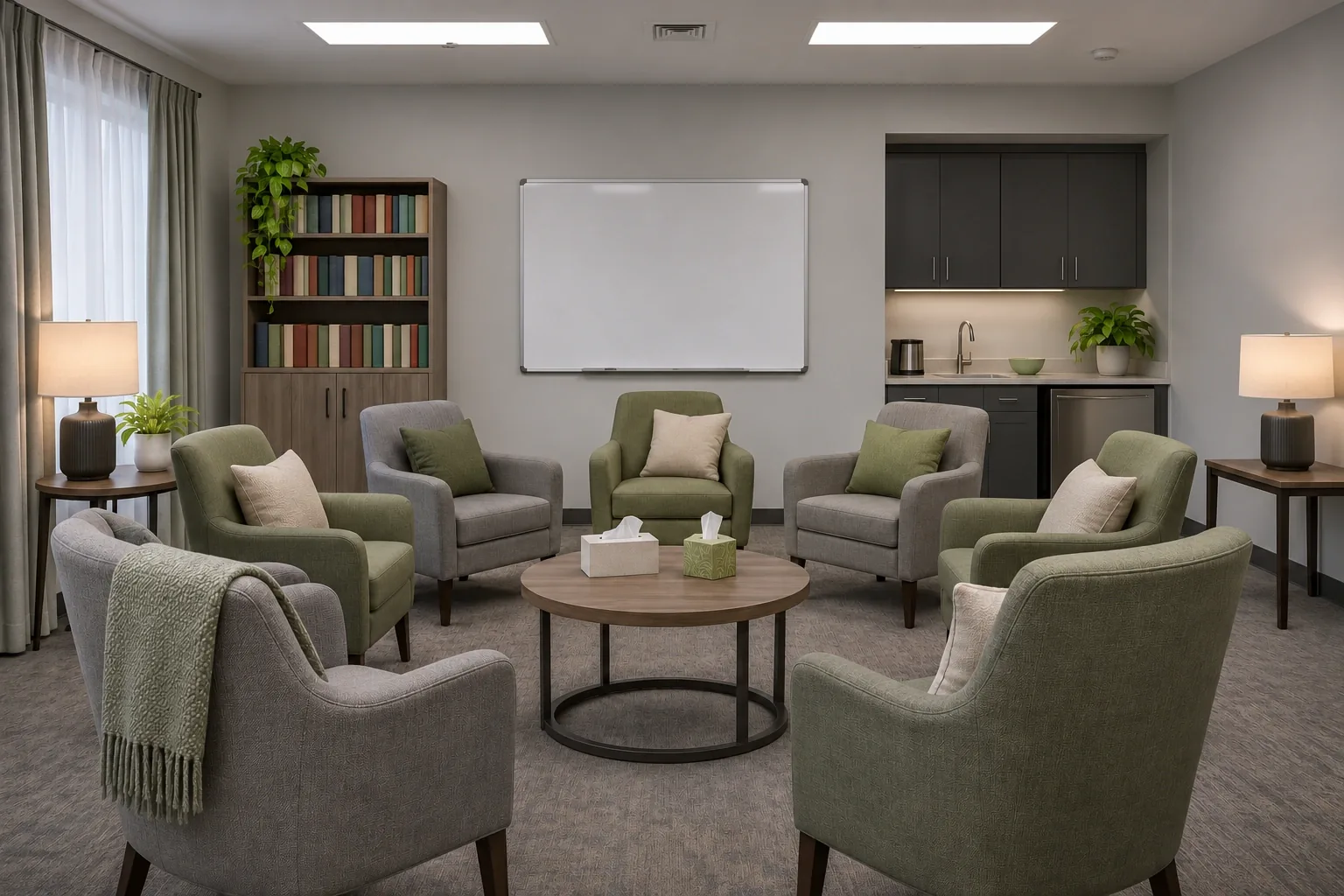
Group and therapy rooms are reset after the last session so the morning starts in order: seating and table surfaces wiped, upholstered chairs vacuumed, supply stations straightened, and carpet or resilient flooring cleaned. Visiting rooms are kept bright and tidy for families.
Dining halls are cleaned after the heaviest meal periods, with tables, chairs, serving counters, sinks and appliance fronts wiped down and floors mopped under every table. Laundry rooms, storage rooms and staff break rooms, the support spaces that keep a residential building running, are part of the plan as well.
Protocol, disinfectants and conduct
The facility’s protocol sets the rules. Your operations or clinical lead tells us which rooms are disinfected, the order of work and any products to keep out of the building, and the crew’s checklist follows it exactly. Disinfection uses EPA-registered products left on each surface for the dwell time the label specifies. When a resident moves out, a terminal clean can be booked to take the room from the high surfaces to the floor.
Crews complete bloodborne-pathogen safety instruction and practice HIPAA-aware conduct: charts, schedules and sign-in sheets are never handled or read, and what crews see or hear stays inside the building. Each cleaner passes a background check, and supervisors run quality inspections on the work.
Scheduling around the program
Programs run on a timetable of groups, appointments, meals and visiting hours, and cleaning slots into it. Resident rooms are done during programming, group rooms between or after sessions and lobbies before visitors arrive. Administrative and outpatient areas are usually cleaned after hours. Facilities that need daytime coverage can add our day porter services for restrooms and common areas.
Crews keep carts out of hallways, speak briefly and politely with residents, and keep chemicals and tools under their own control at all times.
Floors, offices and pricing factors
Hallways, dining halls and day rooms take steady foot traffic, and their floors show it. Resilient floors can be stripped and refinished and hard floors scrubbed through our commercial floor care. Staff offices are dusted, clear desk surfaces wiped and carpets vacuumed, with paperwork left untouched.
Price follows square footage, bedroom and restroom counts, visit frequency, the disinfection steps your protocol requires, terminal cleans and any porter hours. A site visit with your director produces a written price.
Opening a new wing or changing program hours? Request a treatment facility cleaning quote with your session and meal times and the rooms your protocol covers.
Common questions
Do you clean bedrooms while residents live on site?
Yes. Each room is cleaned while its resident is at group or a meal, with belongings and drawers left alone.
What disinfectants do your crews bring into a treatment facility?
Only products your protocol approves, all EPA-registered and left in place for the dwell time on the label.
Is terminal cleaning available after a discharge?
Yes. A booked terminal clean takes the room from high surfaces down to the floor before the next admission.
Can cleaning happen around a 24-hour program schedule?
Yes. Visits are set around groups, meals and visiting hours, and porters can cover common areas during the day.
What should our program director share before cleaning starts?
Your room list, program timetable and disinfection protocol. The crew uses them to clean each room between groups and meals with the products your protocol approves.