
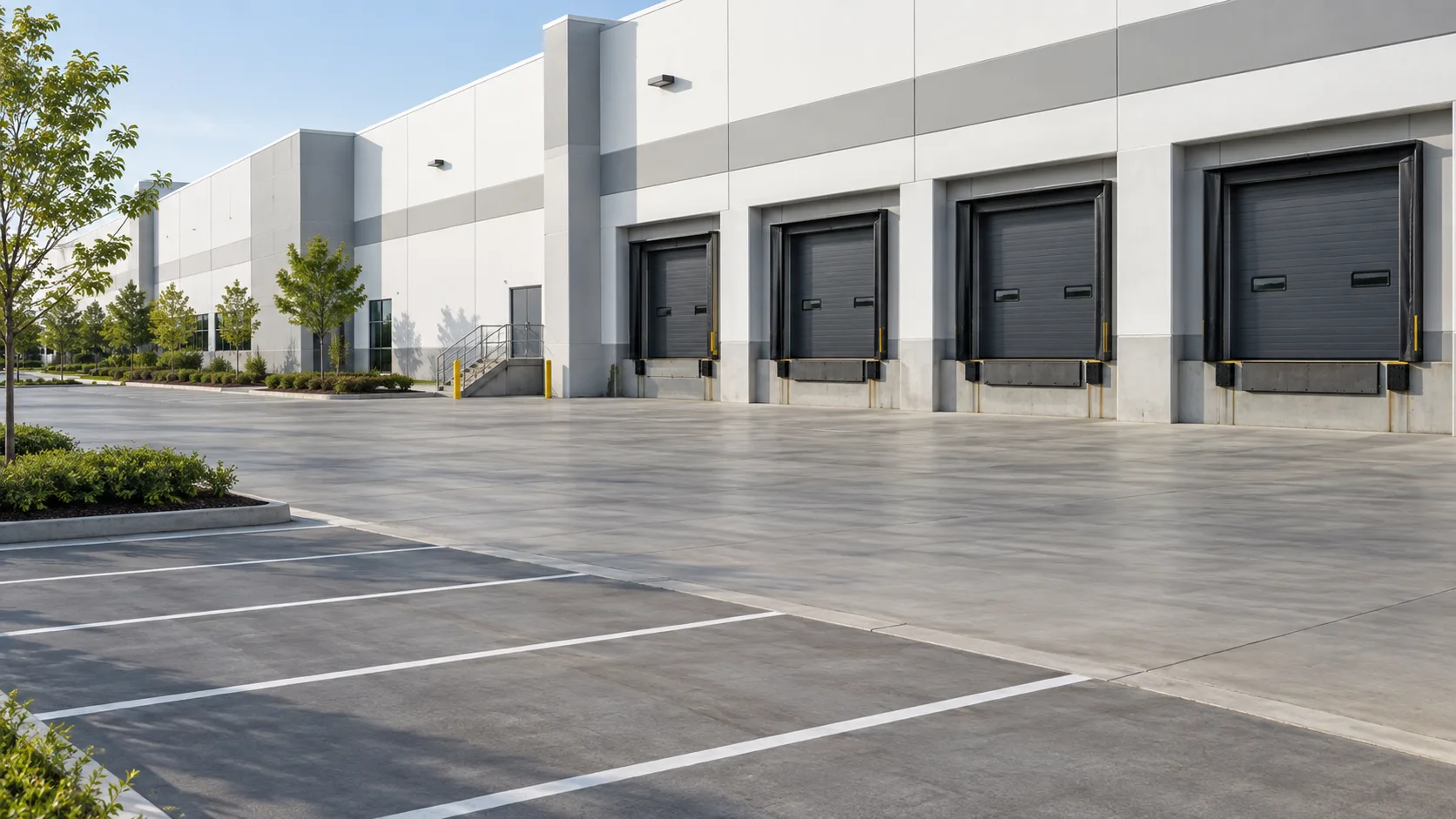
Loading Dock and Parking Area Cleaning
Cleaning for loading docks, parking garages, and commercial parking areas. Denali Industrial Cleaning provides sweeping, litter pickup, and surface cleaning for industrial properties.
Sweeping and litter pickup
Sweeping clears grit, pallet splinters and wrap scraps from docks, aprons and drive lanes. Litter pickup addresses waste in exterior common areas, with the method chosen for the property’s layout and equipment access.
When a surface needs washing
When sweeping no longer lifts the soil, stained aprons and lots move to our industrial pressure washing, which handles the washing side of exterior care.
Cleaning around deliveries and vehicle use
Visits are scheduled when the area is clear of deliveries and parked vehicles, with busy doors left until trailers pull away.
Cleaner approaches for drivers, staff and visitors
Docks and parking areas are the first thing drivers, employees and visitors see, and loose debris and litter build up there quickly. Regular sweeping and litter pickup keep these spaces tidy, and pressure washing adds a deeper clean for compatible surfaces when routine care is not enough.
Visits are scheduled around deliveries and parking activity, so exterior work fits between trucks. Inside the building, concrete scrubbing handles dock approaches, and dock sweeping pairs well with pressure washing at cold storage and automotive sites. Litter pickup on exterior common areas can follow a regular rotation of its own.
Working through a dock, zone by zone
A loading dock has several zones, each with its own soil. The apron where trucks back in collects tire grit and dropped packaging. The strip just inside the doors picks up debris tracked off trailers. Staging lanes gather pallet splinters, stretch-wrap scraps and dust. Sweeping runs from the outside in, so debris is never pushed back into areas already cleared.
Parking areas follow a different pattern. Litter collects along curbs, fence lines and landscaped edges, so a pickup round covers those edges first and sweeping then deals with the open surface.
How often docks and lots need attention
Frequency follows traffic. A cross-dock running trailers through the day sheds debris faster than a building that receives a few deliveries a week, so its apron goes on a tighter sweeping schedule. Employee lots often need litter pickup more often than sweeping, while visitor parking at the front is kept tidy for appearance.
Seasons change the picture. Peak shipping brings more trailers and more debris, and windy months scatter litter across a lot faster. Visits are stepped up for those periods and eased back afterward.
Pairing dock cleaning with other services
Sweeping and litter pickup keep docks and lots tidy between washes. When soil sets in, industrial pressure washing takes over outside, and dock approaches inside the doors fall under industrial floor care.
How dock and parking area cleaning is priced
Dock and lot work is priced by the visit or the sweeper-hour for sweeping and litter pickup, and per square foot for each wash when surfaces are pressure washed. The main drivers are paved area, how often it is swept, and how much litter and pallet debris collects between visits.
Access and timing come next. Docks that stay busy through the day need sweeping in the gaps between deliveries, while a lot that empties at night can be covered in one steady pass. Parking garages with ramps and stairwells take longer than flat surface lots, and oil staining or gum at entrances calls for washing rather than sweeping. Drainage around the paved areas decides which washing method fits, and crews plan water use to protect nearby storm drains. A walkthrough measures the paved areas and sets the visit pattern and price in your quote. For the wider picture, see what drives industrial cleaning costs.
A few useful answers
Frequently asked questions
Can both a parking garage and loading area receive cleaning?
Yes. One visit can cover both: the garage deck by deck and the loading area lane by lane between trucks.
Do you wash surfaces as well as sweep them?
Yes. Washing runs through our industrial pressure washing service, booked once the surface and drainage are checked.
Can parking garages receive regular sweeping?
Yes. Sweeping and litter pickup can run on a recurring schedule matched to how the garage is used.
Can sweeping happen while trucks are still at the doors?
Active doors are left until they clear. The visit works through open zones first, then returns to the busy doors once trailers pull away.
How should we set a litter pickup schedule for an employee lot?
Base it on how fast litter appears. A lot used by several shifts needs more frequent rounds than one used only during the day.
Is parking garage cleaning different from open-lot cleaning?
Yes. Garages are swept with attention to corners, ramps and stair entrances, while open lots focus on the edges where wind carries litter.
Resources