
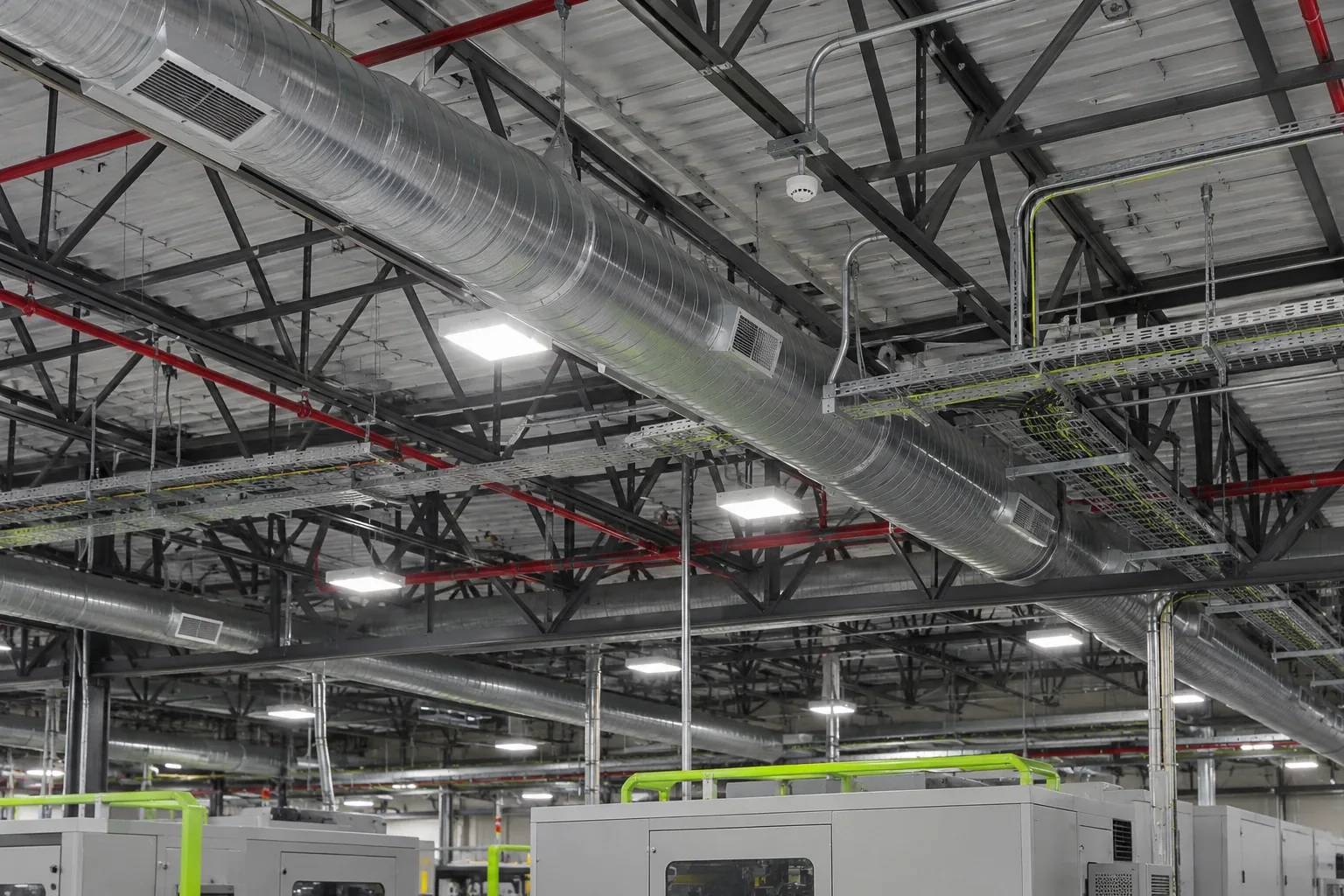
Ceiling and Overhead Cleaning
Periodic ceiling and overhead cleaning for industrial buildings. Denali Industrial Cleaning treats accessible surfaces using methods selected for their material and condition.
Care for ceiling and overhead surfaces
Dust, lint and residue come off the joists, beams, roof deck and wall tops in each area of the project, with the method set by the surface material and its condition.
A method suited to the working height
We reach high roof decks and joists with lifts sized to the space, and protect what sits below. Work is timed around occupancy in the spaces below.
What the overhead pass covers
The work concentrates on the overhead surfaces themselves: roof deck, joists, beams, wall tops, the tops of racking and the outside of ducts and light fixtures, clearing the dust that collects above a busy working floor.
Planning an overhead cleaning project
Overhead dust builds slowly, so it is easy to overlook until it starts to show. Ceiling cleaning tackles it as a periodic project, with the method chosen for the surface material, its height and the access available, and timing set around how the space below is used.
Warehouses, manufacturing plants and commercial laundries can schedule overhead cleaning alongside floor work, and newly finished buildings can include high surfaces in their post-construction cleaning.
Where overhead buildup collects
In industrial buildings, overhead buildup concentrates where air moves least and dust has the longest time to settle. Each building type adds its own soil. Commercial laundries collect lint, food plants gather airborne residue and warehouses carry the fine dust stirred up by forklift traffic.
Overhead areas above food and beverage production follow the facility’s procedures for product and sequence, alongside the plant’s food manufacturing cleaning, so the overhead pass fits the sanitation plan for the rooms below.
Working through a building in sections
Large overhead projects are planned zone by zone. Each section is protected below, cleaned, then reopened before the crew moves on, so a big building can stay partly in use while the project works through it. Weekends, holiday shutdowns and planned maintenance windows suit the zones above lines and equipment.
Whatever falls during an overhead pass lands on the floor, so booking concrete scrubbing right after the overhead work leaves the whole space finished at once instead of in two separate disruptions.
How often to plan overhead cleaning
Frequency follows how quickly buildup returns. Lint-heavy laundries and dusty production areas need overhead attention more often than a clean storage warehouse, and an annual or seasonal cycle usually fits once the first project shows how fast the surfaces reload.
Beyond the surfaces and height, a quote goes faster when you describe what sits below each area, whether that is open floor, racking, product or production equipment, along with the shutdown windows available and where lifts can enter the space.
How ceiling and overhead cleaning is priced
We price overhead cleaning per project rather than as a monthly rate, by the overhead area treated or by crew-hours plus lift time, because two ceilings of the same size can take very different effort. The surface itself sets much of the price, since each material takes its own method and pace.
Height and access come next. A ceiling reachable from a scissor lift on open floor moves quickly, while one above racking, production lines or stored product needs the area below covered and the work staged in sections. Dust load matters as well, since years of buildup take more passes than a ceiling cleaned on a regular cycle. Scheduling around production, shutdown windows and weekend work also shifts the total. We look at the surfaces, height and access on a walkthrough, then set the project price in your quote.
A few useful answers
Frequently asked questions
Is ceiling cleaning a recurring janitorial task?
It is usually a separate periodic project, with the method and timing chosen for the overhead surfaces.
Must the area close during overhead cleaning?
Not always. Open floor away from the lift can stay in use, while areas above lines, racking or stored product are closed off section by section while the crew works overhead.
What details help with an initial ceiling-cleaning quote?
Identify the surfaces, approximate height, and area needing attention in the inquiry form.
Can overhead cleaning be scheduled while the building is closed?
Yes. The project can be timed for periods when the area below is unoccupied, which simplifies protection and access.
Can overhead cleaning be done in sections so part of the building stays open?
Yes. The project moves zone by zone, with protection set up below each section before work starts.
What overhead buildup is common in a commercial laundry?
Lint settles on beams, wall tops and exposed structure above dryers and folding areas, and periodic overhead cleaning removes it before it drifts back down.
Should floor scrubbing follow an overhead project?
It is the efficient order. Scrubbing right after the overhead pass removes anything that settled on the floor and finishes the space in one window.